
By Brenda Holo
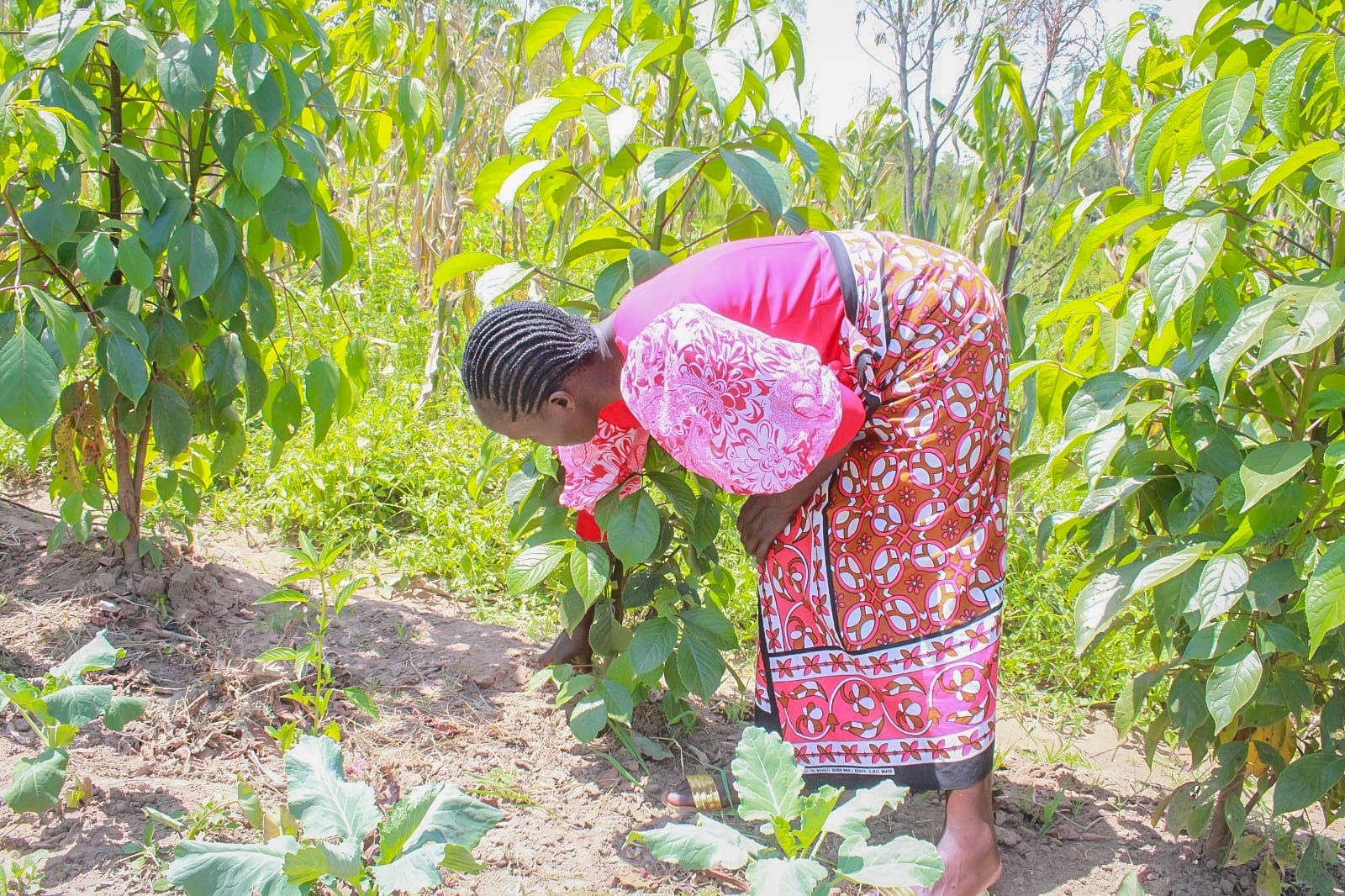
Gorety, a 43-year old from Jwangre village Ugenya. Photo Brenda
The first sign of change is a phone notification. The buzz cuts through the afternoon in Masat East, Siaya County, confirming that one of Gorety Onyango’s trees has survived and she has been paid for keeping it alive.
In Siaya County, which has one of the lowest forest covers in Kenya, the notification signals a shift in the environment. Long before policy papers, carbon markets, and donor dashboards discovered “nature-based solutions", rural women were already negotiating with the land. For women like Gorety, farming had become increasingly uncertain. Inputs had become expensive and rainfall unreliable.
When Gorety, a 43-year-old from Jwangre Village, first heard that she would be given seedlings and paid if the trees survived, she thought it was a scam. One morning, she followed a crowd to a local distribution point, where workers from My Farm Trees, a digital conservation platform, were handing out seedlings and recording farmers’ names.
Gorety planted the indigenous seedlings, replacing the eucalyptus that had been drying up the soil and suppressing her crops. Soon, she noticed that the soil was retaining moisture, and her maize and sukuma wiki were no longer withering.
What began as curiosity became stewardship and eventually income. The results revealed a simple truth that can reshape climate action in rural Kenya: tree planting only works when survival is part of the contract.
Siaya County has a forest cover of just 0.23 per cent, according to the Kenya Forest Service, while Global Forest Watch data estimates natural forest cover at 0.87 per cent as of 2020.
But local officials argue that the numbers only tell part of the story.
“The number one thing is the proportion of land set aside for gazetted forest. Siaya happens to have only two gazetted forests with less than 100 hectares. When you compare that to the county’s total land mass, the percentage appears very low,” says Siaya County Director for Environment, Climate Change and Natural Resources Gabriel Oduong.
He recalls conducting aerial surveillance with the national environment minister.
“She was impressed by how much of the area is actually green,” he says. “It highlights the disconnect between what statistics show and what exists on the ground.”
Beneath the green lies a harsh reality: poverty rarely allows the luxury of long-term environmental thinking.
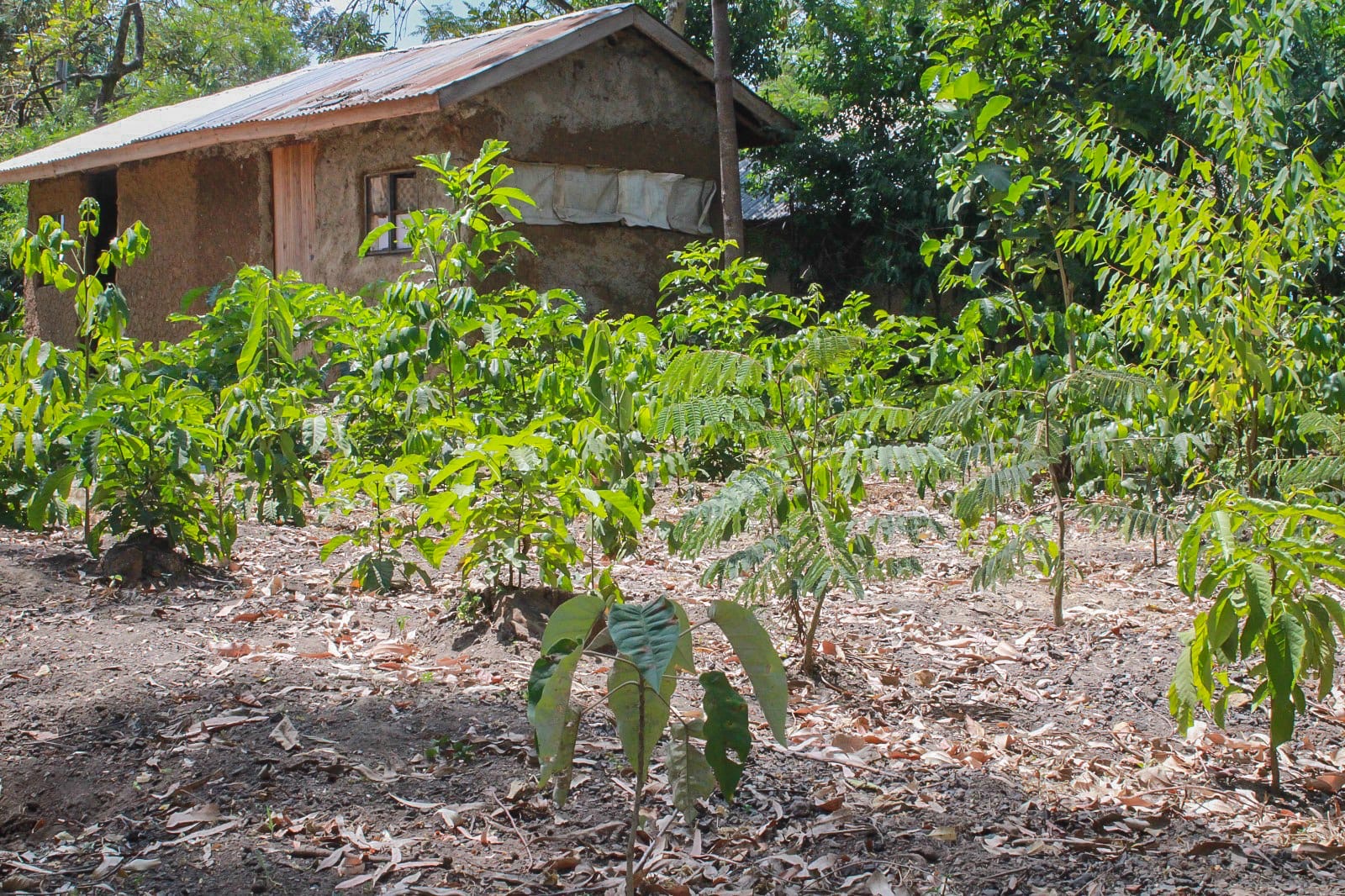 However, in recent years, women have become some of the county’s most consistent tree stewards, planting trees in their kitchen gardens and along the boundaries of small quarter-acre plots where daily survival decisions are made.
Before planting her first set of trees, Gorety didn’t fully grasp the economic value of growing trees. Like many farmers in her village, she prioritised subsistence crops that barely met her household’s needs. Those who planted trees favoured eucalyptus for its fast growth and quick returns despite its ecological costs.
After switching to indigenous trees, both her harvests and income improved.
Lawrence Ongoda, who runs a tree nursery in Ugenya Sub-county, has seen demand for indigenous trees grow as farmers learn the connection between the choice of trees and farm productivity.
“People are moving away from eucalyptus because of its high groundwater consumption,” he explains.
“Indigenous trees have medicinal value, they can sprout again after being cut, and many farmers believe they help attract rainfall,” he adds.
Indigenous species such as Ober (Albizia coriaria), Siala (Markhamia lutea) and Ng’owo (Ficus sycomorus) evolved alongside local soils, insects, birds and rainfall patterns. Rather than destabilising fragile ecosystems, they help restore microclimates that smallholder farmers depend on.
“If you touch an indigenous tree and hold your hand there for five minutes, you will see ants crawling on you. You will hear birds. That is biodiversity,” says Francis Oduor, National Project Coordinator for My Farm Trees.
“If you go to eucalyptus, you often find nothing,” he adds.
For farmers like Gorety, the ecological benefits are reinforced by financial incentives paid out if the trees survive. For subsistence farmers, what they get is not pocket change. It’s money to buy farm inputs, pay school fees and invest in small businesses.
“You cannot sell climate action to someone with an empty stomach,” says Oduor. He adds that farmers now buy seedlings instead of waiting for free distributions. Prices range from Sh10 to Sh40 depending on the species.
Seedlings are geo-tagged and monitored through a digital platform that tracks trees from seedling collection and nursery propagation to survival after planting. The platform integrates three mobile applications used at different stages of the tree lifecycle. Seed collectors use one application to register planting materials and map collection sites. Nursery operators use another app to track propagation and distribution, and farmers manage and verify tree survival using a third interface.
Farmers earn points that are converted into mobile cash transfers when trees remain alive after six months and again after a year, according to My Farm Trees.
Since its launch in August 2022, the platform’s reports indicate that more than 180,000 indigenous seedlings have been distributed in Siaya County. Across three pilot counties — Siaya, Laikipia and Turkana — over 100,000 trees have been registered as planted.
Gorety planted 280 seedlings, but only 180 survived a prolonged dry spell, earning her Sh31,000 in incentives. This raises questions about whether the verification systems adequately account for climate shocks beyond farmers’ control, especially when farmers still invest labour but lose payments when seedlings die due to extreme weather.

An M-pesa confirmation of payment to Gorety Anyango. A resident of Jwangre village. Photo Brenda
Farmers also have limited visibility into how their data is used. Yet as conservation efforts and finance become increasingly data-driven, tree-survival records could potentially be incorporated into carbon credit systems, raising questions about how benefits would be shared.
The platform’s reliance on technology also exposes a layer of inequality. Those who do the most environmental labour are often the least digitally equipped. As conservation efforts become more data-driven and reliant on technology, they risk excluding women in rural areas.
While the national gender gap in mobile ownership is small (54.5% for men versus 52.9% for women), Kenyans in rural areas are less likely to have a phone (48.6%) than those in urban areas (64.6%). There’s also a significant urban-rural divide in internet usage, with internet penetration at 25% in rural areas versus 56% in urban areas, according to reports by the Communications Authority of Kenya and research by the Centre for Intellectual Property and Information Technology Law at Strathmore University.
Alice Anyango, a 52-year-old farmer who earned Sh 38,000 after her trees passed verification checks, says navigating the app is intimidating. Everline Otieno, 44, from Umine Village, does not own a smartphone, locking her out of the programme. She has to wait for monthly training sessions to learn about climate-resilient tree species.
Conservation efforts are also reliant on non-governmental organisations that drive incentive systems, but county officials acknowledge that long-term sustainability will require government investment. “There are still huge gaps. Activities often happen ad hoc. To sustain momentum, we need affirmative budgeting, dedicating part of our development funds specifically to forestry,” says Mr. Oduong.
A 2024 review by the African Peer Review Mechanism (NEPAD) found that environmental services in Siaya are consistently underfunded. Since 2013, the county typically allocates less than 0.5% of the departmental budget to the sector, with no development funding for forestry recorded in 2020 and 2021.
Oduong also points to weak coordination between national tree-planting commitments and local implementation strategies.
“Everyone knows the country is committed to planting hundreds of millions of trees by 2032 and increasing forest cover significantly by 2050,” he says. “But very few people understand the strategy at the grassroots level.”“If you target large-scale farmers, you only reach a small portion of the land,” Oduor explains.
“But when you work with smallholders managing quarter-acre or half-acre plots, that is where real climate impact happens,” he adds.
Climate resilience, he says, will not be built solely in protected forests or corporate plantations but from millions of incremental land-use decisions made by farmers like Gorety.
Yet the future of tree planting pilots targeting smallholder farmers like Gorety is uncertain. Such projects often depend on time-bound incentives, raising questions about what happens when the payments slow or stop. It is unclear whether farmers will continue planting at the same scale or whether county and national governments will step in with sustained funding.
Funding must also address women’s digital exclusion.