
By Kevin Lumumba
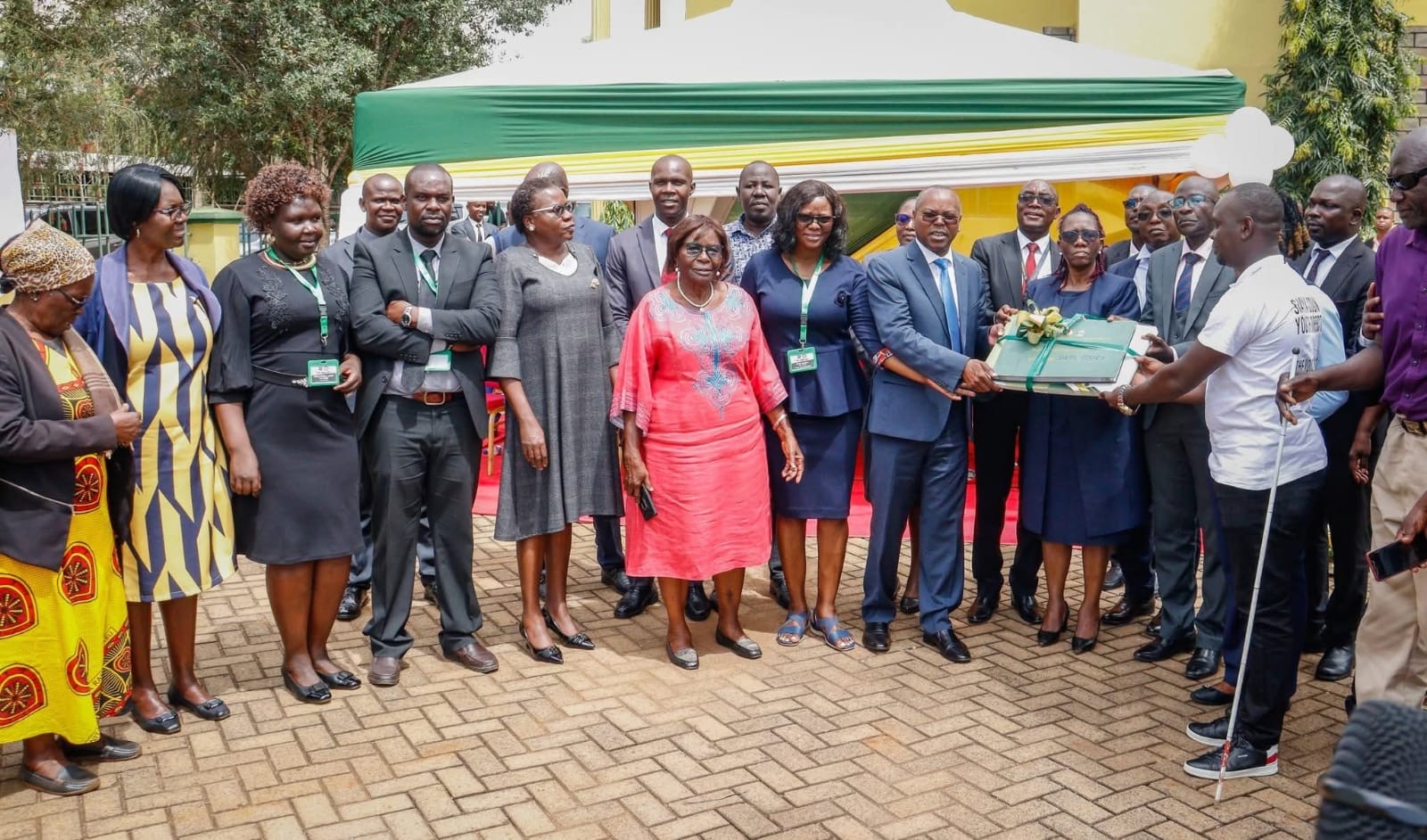 The County Government of Siaya, in partnership with the Kenyan Judiciary, has launched the Alternative Justice System (AJS) to promote peace and harmony within its communities.
Alternative Justice Systems are community-based, non-state mechanisms guided by laws, customs, social norms, and cultural practices. They are established, applied, and enforced by communities themselves, providing dispute resolution outside the formal court system.
The event, held at Arwings Kodhek High Court in Siaya Town, was presided over by the Chairperson of the National Steering Committee on the Implementation of Alternative Justice Systems (NaSCI-AJS), Hon. Mr. Justice (Prof.) Joel Ngugi, who was the Chief Guest. He was flanked by the Chief Officer for Governance, Administration, and ICT, Hon. Walter Okelo, who represented Governor James Orengo.
“What we are witnessing here today is not merely the launch of AJS registries. It is something deeper and more foundational. It is the gradual but deliberate re-anchoring of justice in the lived realities of the people of Siaya,” said Prof. Ngugi.
“The launch of AJS reaffirms that ultimate sovereign power belongs to the people,” he observed, adding that “the Constitution explicitly retains for the people the right to continue resolving their disputes, expressing their culture, and holding justice conversations in spaces beyond courtrooms without requiring the permission or supervision of the Judiciary.”
Hon. Okelo, reaffirmed the Governor’s strong belief in the rule of law and devolution, noting that devolution came as a response to many injustices, particularly marginalization.
 “We appreciate what our courts are doing despite inherent challenges such as case backlogs, limited access to justice, and high costs. Therefore, this opportunity presented through AJS is both timely and a welcome intervention,” he noted.
Hon. Okelo further added that residents will now receive justice where it matters most, within rural areas.
The Chief Officer further confirmed that the county will second one of its officers to the registry to support the professional work of AJS.
County Solicitor Mr. Leonard Okanda called for increased public awareness of AJS, especially in relation to court-annexed mediation, while appreciating and respecting the role of advocates in implementing this concept.
AJS governs social relations from birth to death and promotes people-centered justice that reflects community values and traditions. It also seeks to preserve culture, strengthen social cohesion, promote inclusion, encourage restorative justice, and support reconciliation and unity.
Unlike formal courts, which emphasize winning and losing, AJS focuses on restoring relationships and maintaining community harmony.
Key benefits of AJS include:
* Increased access to justice for many Kenyans
* Affordability and cost-effectiveness
* Faster and more flexible processes with minimal formalities
* Promotion of restorative justice approaches
* Reduction of case backlogs and decongestion of courts
* Encouragement of public participation in justice processes
* Strengthening of civic responsibility and community ownership
AJS mechanisms are fully managed by communities with minimal state involvement. Communities select dispute resolvers and apply their own norms and procedures. These may include chiefs, religious leaders, community elders, NGOs, CSOs, and other recognized institutions.
The AJS Policy is guided by human rights principles that recognize both duty bearers and rights holders. The State is required to protect AJS mechanisms from interference, respect community justice processes, align justice systems with the Constitution, and promote fairness, accountability, and a rights-based approach.
The event was attended by Principal Judge Hon. Eric Ogolla, Siaya’s Presiding Judge Hon. David Kemei, Bernard Okoth (representing the Office of the Attorney General), Ms. Grace Otieno (Chair of the Law Society of Kenya, Western Kenya Branch), and James Ayaga (Vice Chairperson of the Luo Council of Elders).