By Sharon Onyango
At Ndere Health Centre, stories of fear, stigma and interrupted treatment are giving way to hope as mothers living with HIV celebrate their children’s HIV-negative status, demonstrating what sustained care, community support and treatment adherence can achieve.
 For Caren Awuor, an HIV diagnosis in 2021 threatened to change everything she had known about motherhood, relationships and her future. At 40, she recalls experiencing unexplained changes in appetite and weight, recurring throat infections and episodes in which even the slightest cut would cause dark blood to ooze. But nothing prepared her for the diagnosis that would follow when she accompanied her third-born child to hospital in 2021.
Awuor tested HIV-positive.
Having given birth to three children, including her third-born in 2015, all of whom she had given birth while HIV-negative. The news was devastating. Her mind was overwhelmed with questions. How would she tell her family? How would her mother receive the news? Would the people closest to her understand.
But her distress deepened after she encountered stigma from a healthcare worker. Discouraged and emotionally wounded, she returned home without starting the medication she had been prescribed.
For a while, fear and uncertainty kept her away from treatment. Her turning point came when she sought help at Ndere Health Centre in Gem Sub-County, where she received counselling, reassurance and the support she had initially missed.
Healthcare workers encouraged her to bring her partner for testing. He tested HIV-negative, revealing that they were a serodiscordant couple.
Despite counselling, navigating the relationship proved difficult, and the couple eventually separated.
 Beyond the separation, Awuor struggled with the stigma surrounding her HIV status, questioning whether she would ever find someone willing to accept her.
In 2023, she found love again with a partner who was also living with HIV. They decided to build a life together, and in 2024, they welcomed there first baby girl.
This time, her experience of motherhood was different.
Through guidance from healthcare workers and mentor mothers, she understood the importance of treatment adherence, administering prescribed medication to her baby and following recommended infant-feeding practices, including exclusive breastfeeding.
Today, she has established a routine of taking her medication every morning alongside administering her seconds daughter’s prescribed medication. The routine helps her remember and maintain consistency.
She credits Ndere Health Centre’s healthcare workers and mentor mothers for walking with her throughout the journey.
Her message to other mothers living with HIV is that early antenatal clinic attendance, strict adherence to medication and following professional medical advice are essential in preventing mother-to-child transmission.
For Awuor, her daughters future represents something she once feared might never be possible: motherhood without HIV transmission.
A lifetime of resilience: Growing up with HIV
Unlike Awuor, whose diagnosis came after having three children, Mary Gorety was born HIV-positive.Her childhood was marked by frequent illness, financial hardship and the loss of her mother when she was just 10 years old. Raised by her grandmother in a poor household, accessing healthcare was a constant struggle.
 Transport costs frequently stood between her and her medication. Sometimes, when her grandmother could not afford the fare to the health facility, Gorety would miss her appointments and struggle to maintain treatment adherence.
Her inconsistent adherence eventually saw her placed on second-line antiretroviral treatment.
But her circumstances began to improve when healthcare workers intervened, offering support and helping address her transport challenges to ensure she could access medication consistently.
At 17, Gorety entered a relationship with a partner who was HIV-negative.
The difference in their HIV statuses initially presented difficulties, but counselling helped them understand how to protect one another. Her partner was also placed on pre-exposure prophylaxis (PrEP) to reduce his risk of acquiring HIV.
With time, he became an important source of support, and Gorety later in 2023 she became pregnant.
Despite the progress, she says stigma remains a challenge in her life.
She also challenges misconceptions surrounding long-term antiretroviral treatment, particularly the belief that people who take medication for many years are somehow mentally unstable.
Her story underscores the importance of supporting children and adolescents living with HIV as they transition into adulthood, relationships and parenthood.
It also highlights the need to address practical barriers such as transport costs, which can undermine treatment adherence even when patients are willing to remain in care.
Ndere Health Centre records encouraging progress
Beyond the individual stories, Ndere Health Centre is recording encouraging results in its efforts to prevent mother-to-child transmission of HIV.
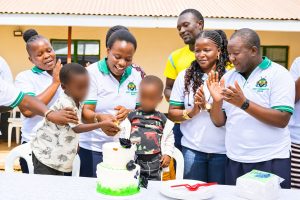
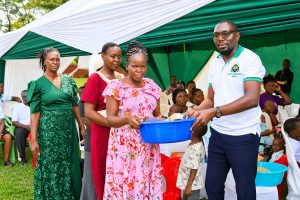 According to Anastasia, a nurse at the facility, 105 HIV-exposed infants (HEIs) have been followed up since 2021, with only one recorded HIV-positive result due to late referral and ANC contact, and today 22 children have graduated after being confirmed HIV-negative and completing the recommended follow-up period of two years
The facility has also enrolled 55 mothers in Vertical Transmision Programme (VTP), also known as PMTCT comprising 46 breastfeeding mothers and 9 pregnant women. The figures reflect the importance of continuous monitoring, early intervention and coordinated care in ensuring that children born to mothers living with HIV have the opportunity to grow up HIV-free.
The graduation of the 22 children at Ndere is part of a wider achievement across Gem Sub-County. At Dienya Health Centre, 50 HIV-exposed infants have also graduated, marking another important milestone in the community’s efforts to prevent new HIV infections among children.
Community health workers at the centre of the progress
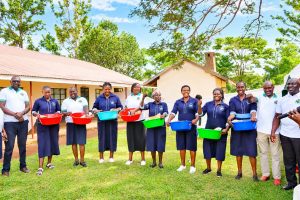
Behind every successful follow-up and every child who completes the programme is a network of Partners, CVTP coordinator/ VTP focal persons, healthcare workers, mentor mothers and Community Health Promoters (CHPs) working to ensure that no mother or child is left behind.
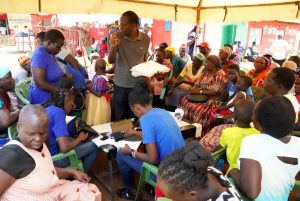
Through household visits, health education, referrals, tracing clients who have defaulted on treatment and encouraging mothers to attend scheduled appointments, CHPs serve as an essential link between households and health facilities.
Their work also includes sensitizing communities on the importance of Social Health Authority (SHA) registration to improve awareness and access to healthcare services.
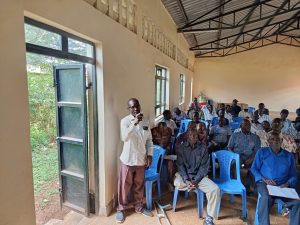
Speaking during the graduation event, Zilper Imbuye, the Vertical Transmision Programme (VTP) Coordinator, commended CHPs for their contribution to the fight against mother-to-child HIV transmission.
She noted that their consistent follow-ups, referrals and tracing of clients who interrupt treatment have strengthened continuity of care and helped improve programmed outcomes.
Imbuye also challenged the graduating mothers to become ambassadors of hope by supporting one another and sharing accurate information within their communities.
“As the festive season approaches, she urged residents to prioritize HIV prevention through regular testing, PrEP and timely access to PEP following potential exposure.”
She further emphasized the importance of triple testing, encouraging individuals to take responsibility for knowing their status and seeking appropriate care.
A county working towards the 2027 triple elimination target
The progress recorded at Ndere and Dienya comes against the backdrop of Kenya’s national commitment to achieve triple elimination of mother-to-child transmission (MTCT) of HIV, syphilis and hepatitis B, targeting an end to AIDS in children by 2027.
Speaking during the event, Dr Bernard Ongu’che MD, expressed confidence that the target was achievable, citing the progress witnessed in Gem Sub-County.
He acknowledged the dedication required from mothers, healthcare workers and community structures, noting that the results demonstrated what coordinated interventions could accomplish.
He urged stakeholders to sustain their commitment and strengthen the partnerships necessary to achieve the 2027 ambition.
For him, the graduation of HIV-negative children was evidence that eliminating mother-to-child transmission was not merely an aspiration but an achievable goal.
The facility in-charge, Tabitha, also appreciated the work of healthcare workers, mentor mothers and community health structures, recognizing their collective contribution to the achievements recorded.
The interventions at Ndere Health Centre are supported through collaboration involving the Department of Health and Sanitation, the facility, community health structures and Ngima For Sure (CHMT CoAg).
Beyond the numbers, a future without HIV
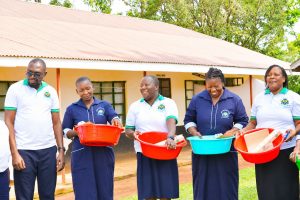 For Awuor, the most meaningful achievement is being able to raise her daughter while remaining committed to treatment and protecting her child’s health.
For Gorety, it is the opportunity to challenge stigma and demonstrate that living with HIV does not take away someone’s right to love, build a family or live a fulfilling life.
Their experiences reveal that preventing mother-to-child transmission requires more than medication. It demands early antenatal care, consistent treatment, accessible healthcare services, compassionate health workers, partner involvement and communities willing to replace stigma with understanding.
The 22 children graduating at Ndere and the more than 50 graduating at Dienya represent families whose determination, combined with sustained healthcare support, has helped secure a different future for their children.
As Gem Sub-County strengthens its interventions towards Kenya’s 2027 triple elimination target, the message from these mothers is unmistakable: an HIV diagnosis does not have to determine a child’s future.
With early intervention, adherence, proper guidance and sustained community support, mothers living with HIV can give birth to and raise children who are HIV-negative.
One mother supported, one child protected and one community empowered at a time, Gem is demonstrating that an HIV-free generation is within reach.