Siaya Strengthens County-Led Efforts to Expand Safe Water Access in Schools
By Sharon Onyango
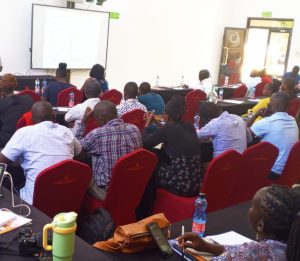 Siaya County is intensifying efforts to sustain safe water access in schools by strengthening county financing, interdepartmental coordination, and accountability under a renewed partnership with Impact Water.
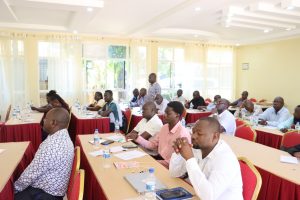
The initiative was the focus of a School Safe Water Programme co-design workshop that brought together the County Department of Health and Sanitation; the Department of Water, Environment, Climate Change, Irrigation and Natural Resources; and the Department of Education, Youth Affairs, Gender and Social Services. Participants developed a joint implementation plan and reinforced local ownership of school water interventions.
Since 2018, the programme has reached 640 schools and more than 289,000 learners through point-of-use water treatment and chlorine tablets. However, 455 of the 794 listed schools still lack partner support, underscoring the need for sustainable financing and improved coordination.
A key challenge identified was fragmented coordination among departments and partners, which can result in duplicated efforts and gaps in service delivery. Participants proposed strengthening interdepartmental collaboration through a County School Safe Water Programme Committee, backed by a clear framework that defines roles, responsibilities, and implementation timelines.
The partnership, formalised through a Memorandum of Understanding (MOU) signed on 22 September 2026, also aims to embed water treatment requirements into the County Integrated Development Plan (CIDP) and Annual Work Plans (AWPs). Impact Water will provide technical assistance in procurement readiness, maintenance of water systems, training, monitoring, and capacity building to strengthen the county’s ability to implement and sustain the School Safe Water Programme.
Priorities include reliable access to safe drinking water, correct use of chlorine tablets, functional handwashing stations, adequate sanitation facilities, and improved menstrual hygiene management. Routine monitoring will assess compliance with school Water, Sanitation and Hygiene (WASH) standards and identify schools requiring additional support.
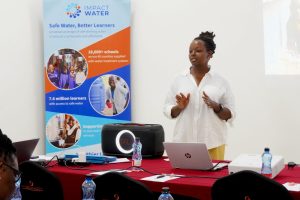 Beyond water access, the workshop emphasised the importance of integrating school health interventions across the health and education sectors. The County School Health Technical Working Group will support joint planning, staff capacity building, supportive supervision, data collection, and evidence-based decision-making.
Progress will be measured through indicators such as school WASH compliance, supportive supervision coverage, timely reporting, and implementation of the county school health work plan.
Through stronger coordination and integration into county planning and budgeting, Siaya aims to build a sustainable, county-led programme that safeguards learners’ health and creates healthier learning environments across the county.