 Siaya County’s facility maternal mortality ratio has declined to 54% in 2026, from 62% in 2025, continuing a downward trend from 68% recorded in 2024.
The improvement is a positive indication of progress in maternal healthcare, while highlighting the need for sustained efforts to ensure women and newborns receive timely and quality emergency care.
Globally, more than 700 women die every day from preventable causes related to pregnancy and childbirth, according to the World Health Organization (WHO).
Despite progress, maternal and perinatal deaths remain a major public health concern, with many deaths resulting from complications that can be prevented or effectively managed when recognized and treated promptly.
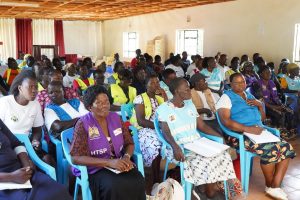
It is against this backdrop that healthcare providers from Government of Kenya, private and faith-based health facilities in Siaya County are being equipped with skills to rapidly recognize and manage obstetric and newborn emergencies through an Emergency Obstetric and Newborn Care (EmONC) mentorship programme.
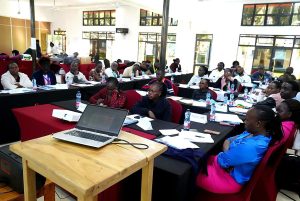 The five-day mentorship was conducted through a partnership between Lwala Community Alliance and the Siaya County Department of Health, bringing together healthcare providers for theoretical learning, practical skills development and simulation-based training. Director of Medical Services, Dr Achieng Fwaya, attended the programme, underscoring the county’s commitment to strengthening emergency maternal and newborn care.
The mentorship focuses on critical areas of maternal and newborn health, including monitoring of labour, prevention of obstructed labour, Active Management of the Third Stage of Labour (AMTSL), postpartum haemorrhage, uterine inversion, retained placenta, cord prolapse, breech delivery, shoulder dystocia, vacuum-assisted vaginal delivery, pre-eclampsia and eclampsia.
Newborn care is also a major component of the programme, with healthcare workers receiving training in immediate newborn resuscitation and post-resuscitation care, Continuous Positive Airway Pressure (CPAP), and management of preterm babies. The programme further emphasizes maternal resuscitation and management of maternal shock, where delays in recognizing and responding to emergencies can have life-threatening consequences.
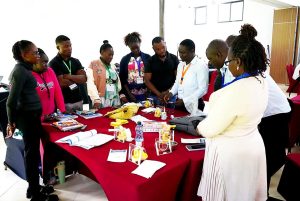
According to WHO, approximately 15 per cent of pregnant women may develop a potentially life-threatening complication during pregnancy, childbirth or the postpartum period, highlighting the importance of skilled healthcare providers and functional emergency systems. The mentorship combines classroom-based learning with practical simulation exercises. Participants rotate through skills stations to practice interventions such as newborn resuscitation, management of postpartum haemorrhage, repair of perineal and cervical tears, management of cord prolapse, vaginal breech delivery and shoulder dystocia.
The training also covers pre-eclampsia and eclampsia, vacuum-assisted vaginal delivery and maternal resuscitation, ensuring healthcare providers can respond systematically to some of the most critical emergencies encountered during pregnancy and childbirth. Beyond clinical skills, the programme promotes teamwork, effective communication, structured emergency response and adherence to standard protocols and tools. These are critical in obstetric emergencies, where coordinated action and timely decision-making can determine outcomes for both mother and baby.
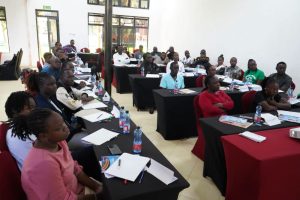 The EmONC mentorship is therefore designed not only to strengthen individual healthcare workers’ clinical competencies, but also to improve the capacity of health facilities to provide coordinated, timely and quality emergency maternal and newborn services. The partnership between Lwala Community Alliance and the County Department of Health further demonstrates the importance of collaboration between government and partners in strengthening the health system and addressing preventable maternal and newborn deaths.
As Siaya’s facility maternal mortality ratio continues to decline, sustained investment in healthcare worker mentorship, emergency preparedness, referral systems, quality improvement and functional maternal and newborn services will remain essential to maintaining the gains and accelerating progress towards eliminating preventable maternal and perinatal deaths.