By Brenda Holo
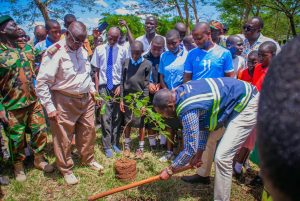 Siaya County marked this year’s Mazingira Day at Pap Kakan Primary School, with county officials, leaders, environmental stakeholders and residents of Siaya county, calling for collective action to restore degraded ecosystems, protect indigenous trees and promote sustainable livelihoods.
The celebrations, held under the theme “My Environment, My Responsibility,” aligned with the National Government’s target of growing 15 billion trees by 2032 to restore 10.6million hectares of degraded landscapes and combat climate change.
Speaking during the event, Principal Secretary for State Department of Medical Services Dr. Ouma Oluga, said the national tree-growing initiative required sustained participation from residents, institutions and county governments to achieve its objectives.
Dr. Oluga commended Siaya residents for planting 10,000 trees during the exercise, urging them to maintain the momentum beyond the annual celebrations. “His Excellency the President has an initiative of 15 billion trees in 10 years, and we need to do our part to ensure we meet this target,” Dr. Oluga said.
He emphasised that the initiative was not merely about achieving a numerical target but also about transforming ecosystems and improving the environment. “It is not just about numbers; it is about changing the ecosystem and changing our environment,” he said.
Dr. Oluga called for greater public access to tree seedlings and environmental knowledge, saying communities needed the necessary resources to participate meaningfully in restoration efforts. He also linked tree growing to economic development, urging residents to embrace fruit farming as a way of improving household incomes and exploring export markets.
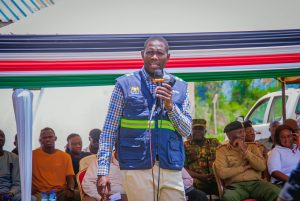 The PS raised concern over the continued destruction of indigenous trees in Got Abiero and Got Ramogi, which he identified as gazetted forest areas facing pressure from illegal tree cutting and charcoal production.
He called for closer collaboration with the Kenya Forest Service and other stakeholders to strengthen the protection of the forests and allow indigenous tree species to regenerate, helping increase the county’s tree cover.
Speaking on behalf of the Siaya County Government ,Chief Officer for Climate Change, Environment and Natural Resources Hon. Jared Abayo said the celebrations were aligned with the National Government’s Landscape and Ecosystem Restoration Strategy for 2022–2032, which supports the 15-billion-tree target.
Hon. Abayo said the county would work with environmental partners, institutions and community groups to establish a coordinated tree-growing programme that extends beyond a single annual event. He proposed setting aside an entire week each year for environmental activities, with implementation beginning at the village level and progressing through wards and sub-counties to the county level.
Under the proposed approach, schools, tertiary institutions, community organisations and other groups would be mapped to identify their existing environmental initiatives and opportunities for collaboration. Hon. Abayo explained that the county was considering establishing tree nurseries in schools to improve access to seedlings and encourage learners to participate in environmental conservation.
He also announced plans to introduce an award system to recognise institutions and organisations making significant contributions to tree growing and environmental restoration in Siaya County.
The proposed programme would bring together the county environment committee, government departments, national agencies, community groups and development partners to coordinate activities and track progress.
“We are looking at a process moving forward that all the players are mapped,” Abayo said, emphasising the importance of organised participation in achieving the county’s environmental goals.
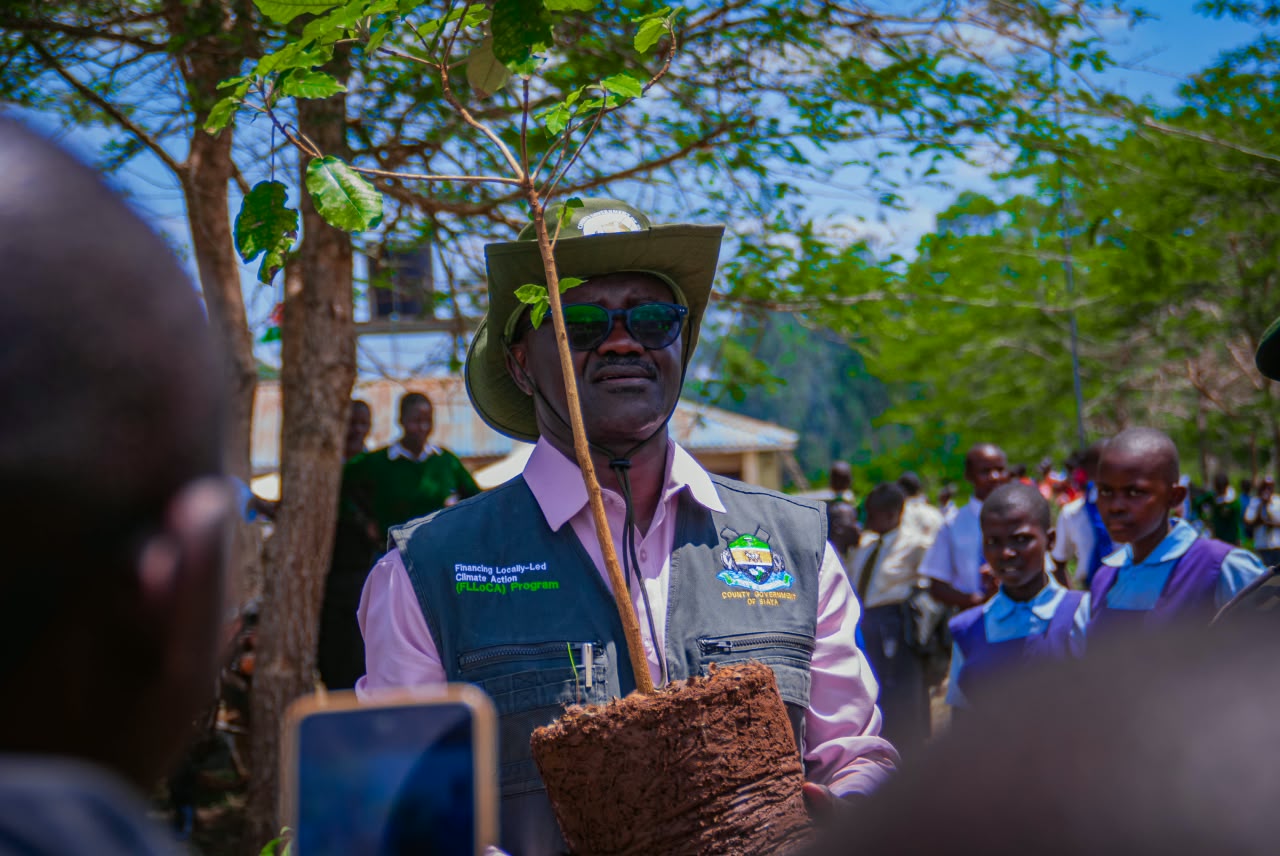
Beyond tree planting, the Chief Officer urged residents to protect rivers, wetlands, riparian reserves and other water catchment areas from encroachment, pollution and degradation.
He called for an end to illegal and destructive sand harvesting, while advocating responsible mining practices that comply with environmental and safety requirements.
The chief officer said the county was developing processes to assess mining hotspots and intended to formulate policies to guide activities in the sector.
He further urged residents to manage waste responsibly, keep homes and public spaces clean, participate in environmental reporting and support the rehabilitation of degraded ecosystems.
Abayo challenged public officers, contractors, project proponents and natural resource users to comply with environmental laws, warning against development activities that compromise the well-being of present and future generations.
In a speech read in absentia by Matthew Oreng, SIBOWASCO Managing Director Isiah Adipo, said the water service provider would support environmental restoration efforts, particularly in areas critical to water supply and sanitation.
The entity committed to supporting restoration around water-source protection zones and degraded catchments, recognising the importance of healthy ecosystems in sustaining water resources.
It also pledged to promote indigenous trees along riparian areas in collaboration with the relevant agencies and encourage the establishment of appropriate green buffer zones around water and sewerage treatment facilities.
The commitments highlighted the connection between environmental conservation and the protection of water infrastructure, particularly as communities face the consequences of degraded catchments and pressure on natural resources.
The celebrations underscored the need to move beyond symbolic tree planting towards sustained environmental management, with county officials calling on residents to take responsibility for conservation in their homes, schools and communities.
As Siaya joined the rest of the country in marking Mazingira Day, the message from the event was that achieving the national target of 15 billion trees will require more than planting seedlings: communities must also protect existing forests, nurture planted trees to maturity and adopt sustainable practices that safeguard the environment while supporting livelihoods.