Siaya County Assesses Readiness for Sustainable Rural Water Service Delivery
By Brenda Holo
The County Government of Siaya has embarked on a rapid assessment exercise aimed at strengthening sustainable rural water service delivery and improving access to safe and reliable water for residents.
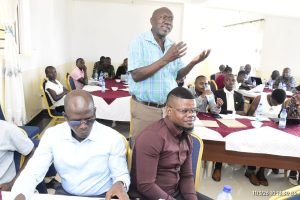
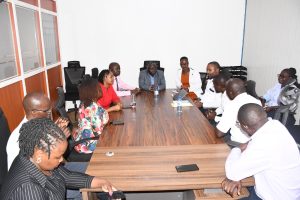
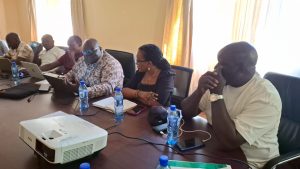 The meeting, conducted jointly by the World Bank, Siaya-Bondo Water and Sanitation Company (SIBOWASCO) and the County Department of Environment, Climate Change, Water, Irrigation and Natural Resources, seeks to determine the county’s readiness to implement sustainable rural water services.
Dubbed the Rapid County Readiness Assessment (RCRA), the exercise examines key areas including institutional arrangements, asset management, financial systems, regulatory compliance and private sector participation in water service delivery.
The initiative is anchored on Article 43 of the Constitution of Kenya, which guarantees every person the right to clean and safe water in adequate quantities and of acceptable quality.
Speaking during the assessment meeting, which was chaired by Chief Officer for Water and Irrigation, Hon. Judith Oyugi, participants noted that many rural communities continue to rely on voluntary community management models that often lack clear accountability structures. This has affected the sustainability of water services in many rural areas.
Among the challenges highlighted was the failure to fully implement the Water Services Regulatory Board (WASREB) Rural Water Guidelines, which stakeholders said has negatively affected the management and sustainability of rural water schemes across various counties.
The assessment is also reviewing county compliance with the Water Act, 2016, key water sector frameworks and national water and sanitation policies.
Siaya is among several counties participating in the exercise, alongside Makueni, Kitui, Laikipia, Kakamega, Turkana, Mandera and Tharaka Nithi.
Arthur Omollo, a consultant on issues Sustainable Water Services urged counties to strengthen their water systems through improved asset management, financial sustainability and regulatory compliance.
“Counties must ensure that water infrastructure is properly managed, metering systems are functioning and billing mechanisms are effective to generate revenue needed for maintenance and expansion of services,” he said.
Mr Omollo also called for enhanced private sector participation to improve the sustainability of water schemes and emphasized the need for county to strengthen water resource conservation efforts. He further recommended a review of the county water and sanitation policy and the development of an updated County Water Act.
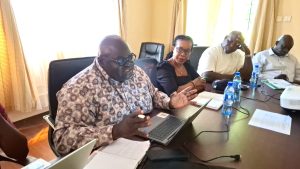 Siaya County Director of Water Mr. Henry Juma noted that reforms introduced under the Water Act, 2002 led to the separation of responsibilities in the water sector but challenges remain, particularly inadequate financial capacity among service providers.
He said SIBOWASCO, the county’s only licensed water service provider, currently manages nine water schemes, limiting its ability to extend services to all areas of the county.
Mr Juma added that about 60 community-managed water schemes are still operated by local communities and encouraged them to register as Water User Associations (WUAs) to improve governance and access to support.
Hon. Oyugi who chaired the meeting appealed for greater support from development partners and stakeholders in the rehabilitation of aging infrastructure, capacity building and improvement of water facilities across the county.
She also called for a review of water tariffs to enable service providers to generate sufficient revenue for operations, maintenance and future investments in the sector.
The meeting was also graced by the Chairperson of the County Assembly Committee on Water, Environment and Climate Change Hon. Justus Oguta (West Uyoma Ward), sub-county water engineers, representatives from the World Bank, official from SIBOWASCO and technical officers from the county water department.