By Celestine Anyango and Rhayan Kanyandong
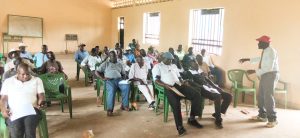
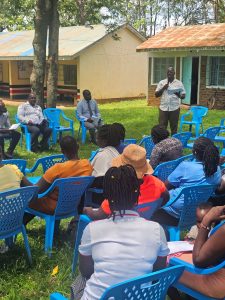
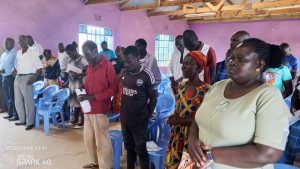 The County Government of Siaya, through the Department of Roads, Public Works, Energy and Transport, has held public participation forums to gather residents’ views on the Draft Siaya County Energy Policy 2026–2035. Sessions in Ugenya and Gem sub-counties drew community members who raised concerns, sought clarifications and offered recommendations aimed at ensuring the policy delivers reliable, sustainable and locally relevant energy solutions.
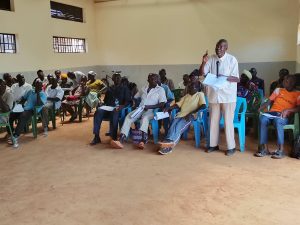
In Ugenya Sub-County, the forum took place at Ukwala Town Hall. Facilitated by Mr. Vincent Odour, the session opened with an interactive discussion in which participants explained what energy meant to them in their own languages and according to their understanding. Odour later provided a formal definition to build a shared understanding of the subject. He outlined the reasons for developing and reviewing the draft policy, highlighting existing gaps and the need to create a favourable environment for improved energy development and investment in the county.
Guiding participants through the document, Odour simplified technical information into accessible language, particularly for the elderly community members present. He emphasised that the review process seeks to address current challenges and open opportunities for individuals and investors with innovative ideas for reliable and sustainable energy solutions.
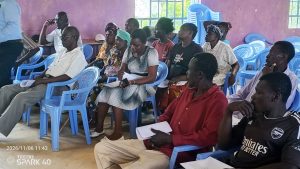 Residents raised several issues. Some questioned the proposed ten-year policy review period, arguing it is too long given the rapid pace of change, and recommended a five-year review cycle instead. Others called for greater public involvement from the initial stages of policy drafting, not only during the review process. Participants sought clarification on whether the policy would introduce new energy sources or focus mainly on improving existing ones. Concerns were also raised about the proposed nuclear energy development programme, which identifies eight potential sites including Ugambe, Sirongo and Liunda. Residents wanted assurance that any nuclear development would not negatively affect their lives and livelihoods. Additional questions focused on the criteria used to identify households without electricity under the Last Mile Connectivity Programme.
In response, Odour assured residents that the County Government of Siaya will be fully involved in energy-related initiatives within the county, including the Last Mile Connectivity Programme. On nuclear energy, he explained that a feasibility study will be undertaken and that the public will be involved and consulted before any implementation decisions are made. The Ugenya forum provided residents with a valuable opportunity to express their views, seek clarification and offer recommendations so that the proposed policy reflects the needs and aspirations of the people of Siaya County.
In Gem Sub-County, residents gathered at Wagai Resource Centre and called for stronger stakeholder partnerships, region-specific energy interventions and targeted skills development. They emphasised that the policy must go beyond setting out sector ambitions to provide clear, actionable and implementable interventions that respond to actual local needs and deliver practical development outcomes.
A key recommendation was that the County Government actively engage energy-sector partners and stakeholders operating in different regions of the county. Residents urged relevant institutions, development partners, private-sector players and energy service providers to designate representatives to participate in both policy development and implementation. They observed that such involvement would help incorporate region-specific energy needs, priorities and challenges while strengthening institutional ownership, technical support, investment mobilisation and accountability.
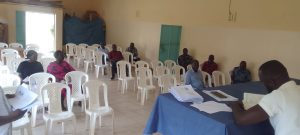 Participants further stressed the need for practical mechanisms that translate policy commitments into tangible community-level interventions. Meaningful stakeholder representation, they said, is critical to making the policy actionable, realistic and implementable.
Another significant recommendation centred on linking the energy policy to the county’s Vocational Training Centres (VTCs). Residents urged policy drafters to deliberately integrate VTCs into the energy development framework so that local youth, women and Persons with Disabilities (PWDs) can acquire relevant skills and benefit directly from emerging opportunities. They proposed tailor-made training programmes covering solar technology installation and maintenance, renewable energy systems, clean cooking technologies, energy efficiency, sustainable biomass utilisation and other green-economy skills. VTCs, they noted, could serve as strategic centres for technical training, innovation, enterprise development and workforce preparation. Stronger collaboration between the County Government, training institutions and energy-sector partners was called for to support curriculum development, practical training, certification, internships and pathways to employment and self-employment.
Participants emphasised that energy policy opportunities should not remain limited to infrastructure investments and institutional programmes but should also translate into livelihoods, skills transfer, business opportunities and economic empowerment, particularly for young people, women and persons with disabilities.
On sustainable energy access, residents supported interventions aimed at reducing dependence on firewood and charcoal through increased adoption of cleaner cooking alternatives, including Liquefied Petroleum Gas (LPG), as well as renewable energy solutions such as solar power. They also highlighted the importance of promoting tree planting, sustainable biomass utilisation and environmental conservation as complementary measures to strengthen climate resilience and protect local ecosystems.
Other areas discussed included improving access to energy services, strengthening consumer protection in electricity distribution, enhancing energy planning at ward and village levels, and establishing sustainable financing and institutional coordination mechanisms to support energy-sector investments. Residents underscored the importance of inclusive decision-making, calling for deliberate measures to ensure women, youth and persons with disabilities are adequately represented in energy-sector planning and have equitable access to the opportunities created by the policy.
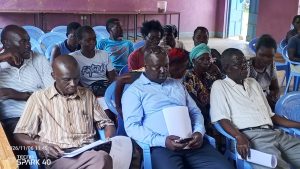 The Gem public participation exercise, convened by the County Government of Siaya through the Department of Public Works and Energy, provided an important platform for residents to influence the proposed policy with practical recommendations informed by local experiences and development priorities. Submissions from Gem residents will contribute to the consolidation of the Draft Siaya County Energy Policy ahead of its consideration by the County Executive Committee and subsequent submission to the County Assembly for deliberation and approval.
Across both forums, residents called for an energy policy that is responsive to local realities, anchored in strong partnerships, practical implementation frameworks, skills development and inclusive economic opportunities for the people of Siaya County.